Farmingdale State College
Architectural Design II
ARC 257: Project 3
Light
The purpose of this project is to design a proposed non-denominational chapel on the campus of Farmingdale State College. The goal is to create a deeply spiritual space where individuals of all faiths can gather to worship and reflect on life’s experiences.
The College envisions achieving this atmosphere through the thoughtful and creative use of natural light. This required exploring innovative ways to control how light enters the space, while also addressing the tension between the built environment and the surrounding natural landscape.
To resolve this, I analyzed existing patterns on the campus site, along with seasonal variations in light direction and intensity. These insights informed key decisions about the chapel’s placement, orientation, and overall design.

Light Background Research
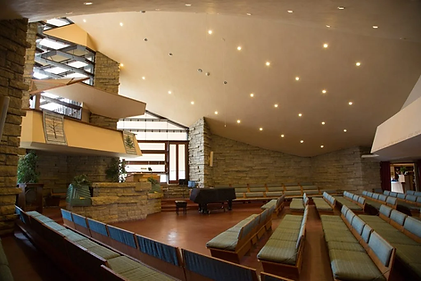
Frank Lloyd Wright - Unitarian Meeting House
Frank Lloyd Wright designed the Unitarian Meeting House to emphasize simplicity, spirituality, and the relationship between natural light and space. Rather than using dramatic colored light like Steven Holl’s Chapel of St. Ignatius, Wright focused on warm natural illumination to create a calm and welcoming atmosphere for worship and community gathering.
Natural light enters the building through clerestory windows and skylights, softly illuminating the sanctuary while emphasizing the geometric forms and wooden materials throughout the space. The angled ceiling directs light across the interior, creating changing patterns and shadows throughout the day that enhance the spiritual quality of the space.
The building’s triangular forms and sloped roof help guide both movement and light through the structure. Wright used light not only for visibility, but also as an architectural element that connects the congregation to nature and reinforces the sense of unity, reflection, and openness central to Unitarian beliefs.
The warm wood surfaces reflect natural light throughout the interior, creating a soft glow that makes the space feel intimate yet expansive. The combination of organic materials, controlled daylight, and strong geometric forms demonstrates Wright’s philosophy of designing architecture in harmony with both people and the natural environment.


Site Selection
I felt this location was the most suitable for the church. Since there are no nearby buildings obstructing natural light, the space can fully benefit from daylight. In addition, its distance from the academic buildings helps create a quieter and more peaceful atmosphere.

Sorting of Spaces
Religious:
-
Main Chapel
-
Meditation Chapel
-
Memorial Chapel
Hierarchy:
-
Main Chapel
Secular:
-
Secretary's Office
-
Clery's Office
-
Library
-
Conference Room
-
Storage
-
Bathrooms

Final Floor Plan
Vise Grip

STORAGE
CONFERENCE ROOM
LOBBY
MEMORIAL CHAPEL
MAIN CHAPEL
MEDITATION CHAPEL
LIBRARY
CLERGY'S OFFICE
SECRETARY'S OFFICE
BR
BR
Circulation:
Tea Leaf Ball Strainer
Eyelash Curler

Contextual Anaylsis Charts

Circulation:
Macro Vehicular
Micro Vehicular
Macro Pedestrian
Micro Pedestrian

Forms:
1 Floor
2 Floors
3 Floors
4 Floors

Function:
Academic
Adminstration
Student Life
Utility
Athletic
Residential

Space:
Parking
Formal
Athletic
Informal
Open
Semi-Formal
Sun Angles
Winter
Spring
Summer
Fall


Preliminary 2D Light Sections

Surrounding Context


Elevations

Northeast Elevation

Southeast Elevation

Northwest Elevation

Southwest Elevation
Sections

Section 1

Section 2

Section 3

Section 4
3D Sections


Renders